the waddington Lending Library
Welcome to our Society’s book request service
We have created a way for you to browse and request Society books. The majority of these have been graciously provided by Janice Waddington on behalf of her late husband, Rick.
We will continue to provide the “Library table” which will be set up at each public lecture in addition to this service.
Take a moment or two to browse the books and if you would like to borrow one, simply click on the “REQUEST A BOOK“ button below.
Behind the scenes an email will be automatically sent to the Society’s librarian to process your request. Following this you will receive a confirmation email with collection details (this will be normally the next HAPY lecture held at the Cooper Gallery).
We hope you will enjoy using this members-only service.
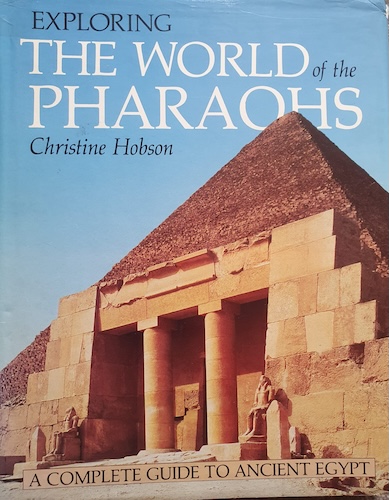
Exploring the World of the Pharaohs
09/06/2025Author: Christine Hobson
EXPLORING THE WORLD OF THE PHARAOHS is a complete guide to ancient Egypt. Fully illustrated with stunning photographs, maps and diagrams, it provides the modern traveller, student or enthusiast with all the information necessary to appreciate this giant among early civilizations. Contents include:
Survey of the land of Egypt and its history
The story behind each of the major sites
Profiles of the great international archaeologists
Gazetteer for the tourist, to serve as a guide through the whole of Egypt
Specially drawn explanatory diagrams of the great tombs, pyramids and temples
Detailed maps and site plans
Comparative time-line chronicling the rise and fall of civilizations in the ancient world
Chronology and list of the principal kings of ancient Egypt
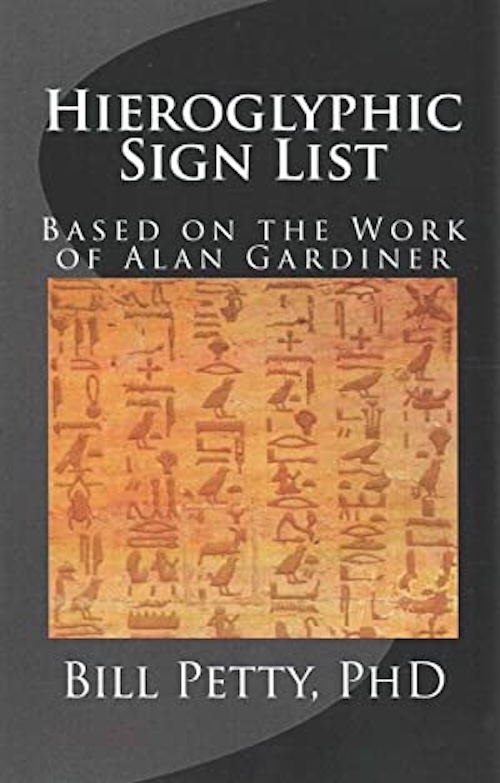
Hieroglyphic Sign List
19/03/2023Author: Bill Petty, PHD
The Hieroglyphic Sign List is part of Museum Tours’ series “The Essentials” books that anyone serious about the study of Egyptology will find useful. This paperback version of the Hieroglyphic Sign List was developed as an outgrowth of Museum Tours’ popular, pocket-sized Sign List book. By increasing its size we were able to overcome most of the limitations of the smaller book. It is not just a larger version of the spiral bound book. It has been completely re-edited and updated. Definitions have been expanded. Sign descriptions have been added. More relevant examples have been included. Words have been spelled out in glyphs as well as in transliteration. In order to maintain ease of use, the order and the numbering generally follow the sign list in Gardiner’s Egyptian Grammar. From Museum Tours Press
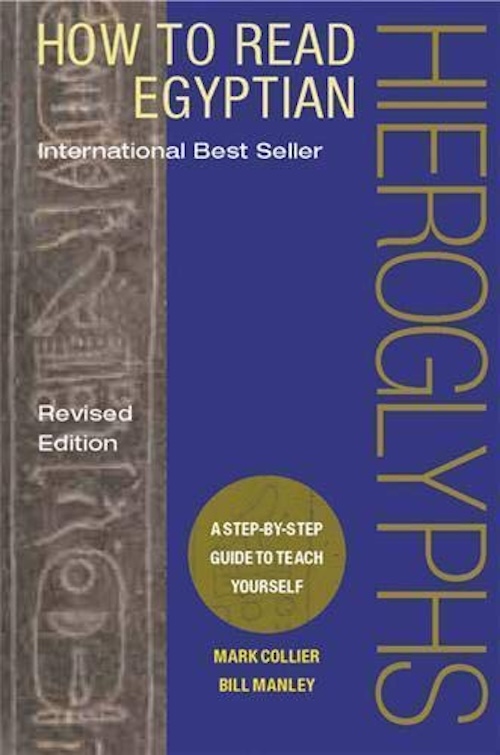
How to Read Egyptian Hieroglyphs
19/03/2023Authors: Mark Collier and Bill Manley
Hieroglyphs are pictures used as signs in writing. When standing before an ancient tablet in a museum or visiting an Egyptian monument, we marvel at this unique writing and puzzle over its meaning. Now, with the help of Egyptologists Mark Collier and Bill Manley, museum-goers, tourists, and armchair travelers alike can gain a basic knowledge of the language and culture of ancient Egypt. Collier and Manley’s novel approach is informed by years of experience teaching Egyptian hieroglyphs to non-specialists. Using attractive drawings of actual inscriptions displayed in the British Museum, they concentrate on the kind of hieroglyphs readers might encounter in other collections, especially funerary writings and tomb scenes. Each chapter introduces a new aspect of hieroglyphic script or Middle Egyptian grammar and encourages acquisition of reading skills with practical exercises. The texts offer insights into the daily experiences of their ancient authors and touch on topics ranging from pharaonic administration to family life to the Egyptian way of death. With this book as a guide, one can enjoy a whole new experience in understanding Egyptian art and artifacts around the world.
Middle Egyptian
19/03/2023Author: James P Allen
Middle Egyptian introduces the reader to the writing system of ancient Egypt and the language of hieroglyphic texts. It contains twenty-six lessons, exercises (with answers), a list of hieroglyphic signs, and a dictionary. It also includes a series of twenty-six essays on the most important aspects of ancient Egyptian history, society, religion, literature, and language. Grammar lessons and cultural essays allows users not only to read hieroglyphic texts but also to understand them, providing the foundation for understanding texts on monuments and reading great works of ancient Egyptian literature.
This third edition is revised and reorganized, particularly in its approach to the verbal system, based on recent advances in understanding the language. Illustrations enhance the discussions, and an index of references has been added. These changes and additions provide a complete and up-to-date grammatical description of the classical language of ancient Egypt for specialists in linguistics and other fields.

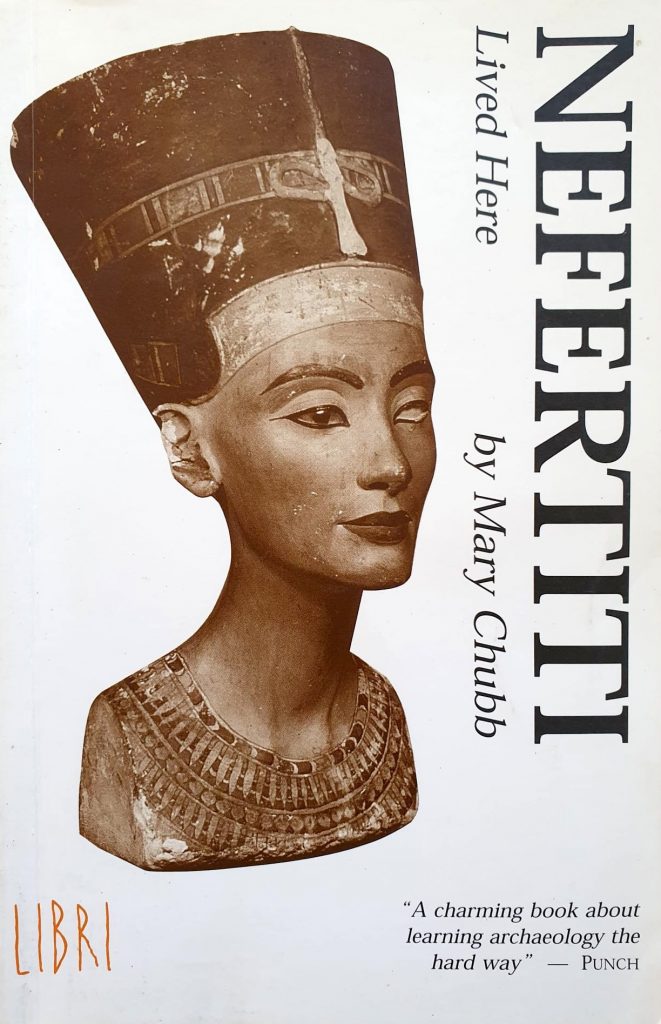
Nefertiti Lived Here
18/03/2026Author: Mary Chubb
Mary Chubb was born in 1903. In 1928 she joined the staff of the Egypt Exploration Society in London as an under secretary, and two years later was sent out to dig at Tell el Amarna – an experience which inspired a lifelong, if unschol-arly, enthusiasm for archaeology in general and Egyptology in particular. Egypt was followed in 1933 with a season in Iraq, at the site of Tell Asmar, with the Oriental Institute of the University of Chicago, and a short spell in the United States.
Mary Chubb first turned her hand to writing and broadcasting in the 1940s, contributing to Punch and working with the BBC. Nefertiti Lived Here first appeared in 1954, followed by City in the Sand, a colourful account of her experiences of dig life in Iraq.
Pocket Guide to Ancient Egyptian Hieroglyphs
09/06/2025Author: Richard Parkinson
Learn how to read and write like an ancient Egyptian!
Simply follow the instructions and pictures in this book and you could soon impress your friends by reading out the names and titles on a real Egyptian monument, or writing your own name or a secret message in hieroglyphs.
Spot the names of famous pharaohs.
Write Egyptian hieroglyphs for yourself.
Read and translate names, titles, numbers and Egyptian offering prayers.

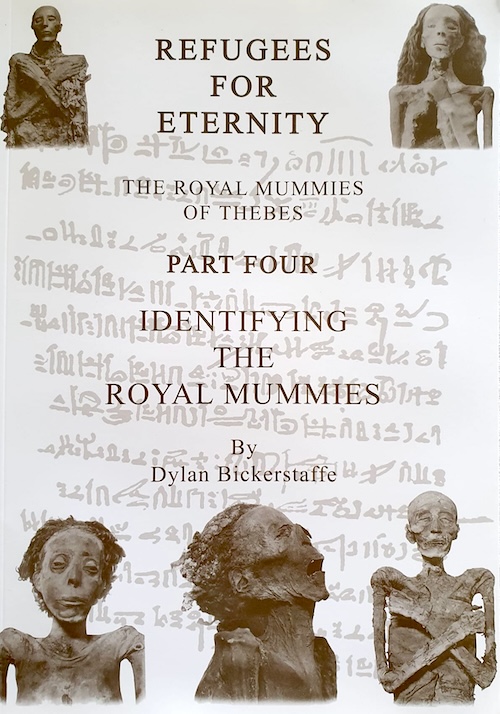
Refugees for Eternity
23/05/2026Author: Dylan Bickerstaffe
The book Refugees for Eternity, of which this is Part Four, came into being as a result of studies I conducted into a strange mummy – identified only by the title of Unknown Man ‘E’ – that was discovered in the Royal Cache tomb alongside many famous kings and queens from Ancient Egypt’s most celebrated era, the New Kingdom. My hope was that research into this mummy, and into the creation of the cache of royalty of which he was a part, might provide some positive leads in uncovering his identity.
Searching for the Lost Tombs of Egypt
18/03/2026Author: Chris Naunton
Egypt boasts some of the most spectacular ancient ruins in the world. Over the past two centuries, archaeologists have unearthed the burials of many of Egypt’s celebrated pharaohs, from the chambers deep within the famed pyramids at Giza to the royal tombs hidden among the rocky hills of the Valley of the Kings. Yet there is much still to find. In this gripping account, Chris Naunton describes the quest for these great ‘missing’ tombs – those that we know must exist, but remain hidden in the sands, awaiting discovery.
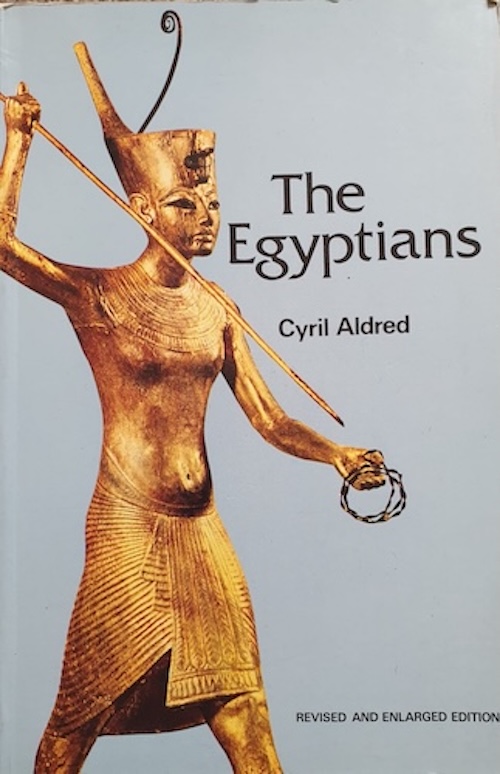
The Egyptians
09/06/2025Author: Cyril Aldrin
Ancient Egypt may have been, in the words of a famous epigram, ‘the gift of the Nile’, but the character of Egyptian civilization owed much to her god incarnate, the pharaoh. It is these twin themes – the overwhelming importance of the annual inundation of the Nile and the rise and fall over three thousand years of the power of the divine king – that provide the unifying thread running through this superbly written narrative.
Cyril Aldred’s panoramic survey takes us northwards down the Nile from Nubia to the cities of the Delta; and from the first Stone Age settlements to the climax of Egyptian civilization and its subsequent demise in the Late Period. Jacquetta Hawkes called the first edition of The Egyptians a ‘masterpiece of compression’. Without in any way losing the succinct and lucid qualities of the original, the author has entirely rewritten his text, in so doing almost doubling its length and providing for the student or traveller an indispensable and up-to-date guide to the world of the ancient Egyptians.
One of the most distinguished Egyptologists of our time, Cyril Aldred was from 1961 to 1974 Keeper of the Department of Art and Archaeology at the Royal Scottish Museum Edinburgh.
Views: 520