This was a hugely interesting talk given by Diana Hayden which took us through the archaeology of burials in Egypt from about 54,000 years before present (BP) up until the first Pharaonic burial – presumed to be that of the pharaoh “Scorpion”. Of course, the evidence of such ancient burials is very slim, sometimes relying on a single burial and Diana was at pains to point out the dangers of drawing too many conclusions from one site. For example, did the appearance of child skeletal remains on a rubbish dump (at Merimde) really indicate a heartless attitude to child mortality?
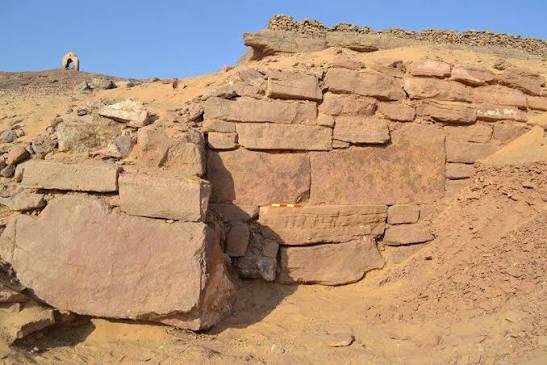
The oldest grave dates to about 54,000 BP at Taramsa – a single, extremely fragile, child burial placed under a pile of discarded flint workings. The careful placing of the remains suggests a care in dealing with the dead from a people living at a “super-arid” period in Egypt’s prehistory.
A war grave dating from 16,000 BP at Jebel Sahaba very definitely showed evidence of a violent society, with female skeletons showing marked defensive wounds and male skeletons showing evidence of fierce fighting. With the consideration of the evidence, we are transported back in time and are forced to wonder what dreadful event led to the deaths of these individuals.
From about 7000 BP, at Merimde, we see pit burials but no evidence of grave goods, but by the time of the pit burials at El-Badari, there are grave goods aplenty; and evidence of the first attempt at preserving the corpses by using resin-soaked wrappings.
By 5800 BP to 5100 BP at Nekhen, the evidence of elite burials is clear, with the most elaborate burials having animals such as dogs, cows, baboons, crocodiles and even an elephant accompanying the dead in the grave.
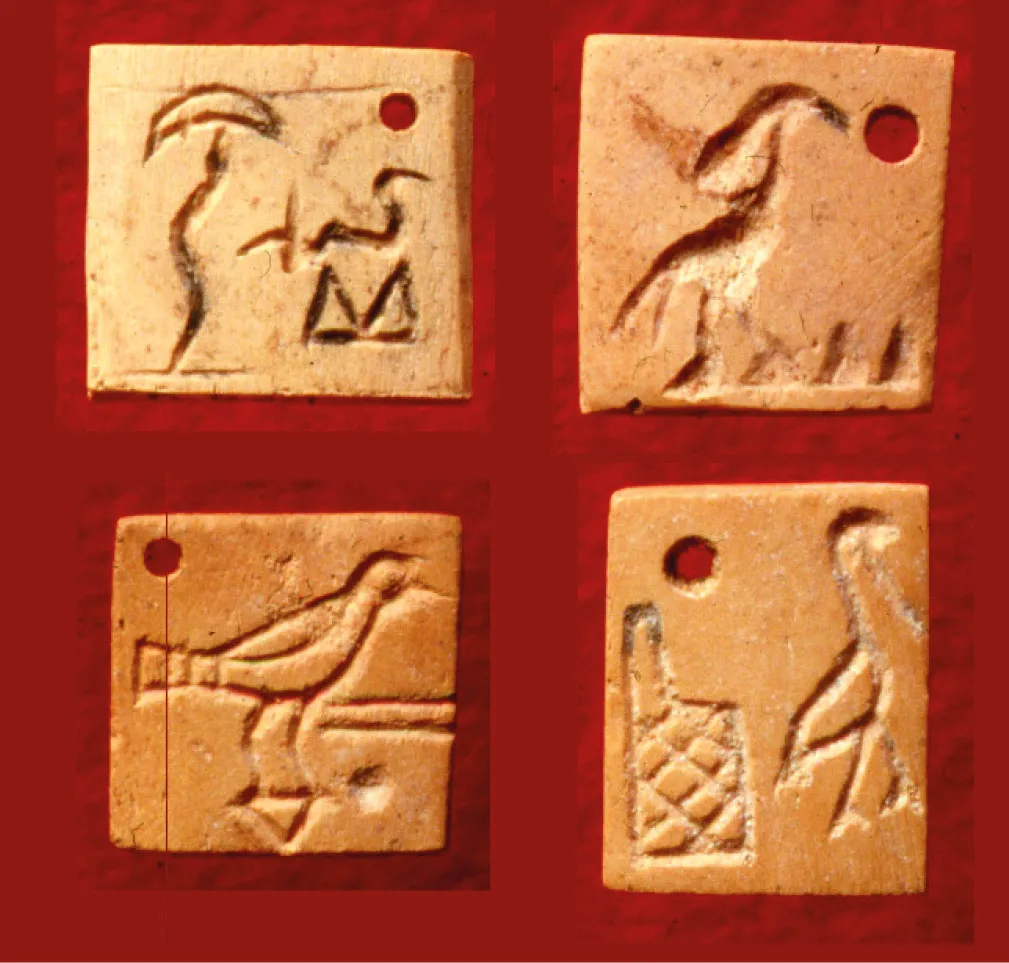
Jar labels from Tomb U-j
Developments continued with corpses being interred inside pots, sometimes of a very large size and tombs which on occasion have wall paintings.
And so, finally, we arrived at Abydos with the tomb U-j. Dating to about 5300 BP this is a remarkable structure, made of mudbrick and probably roofed. With evidence of the earliest writing (on labels) this is clearly an elite burial and one notionally attributed to the pharaoh “Scorpion”.
Our thanks to Diana for taking us through an extremely interesting topic and giving us some solid foundations with which to approach our understanding of Ancient Egyptian mortuary philosophy.
Andrew Ward
Views: 6